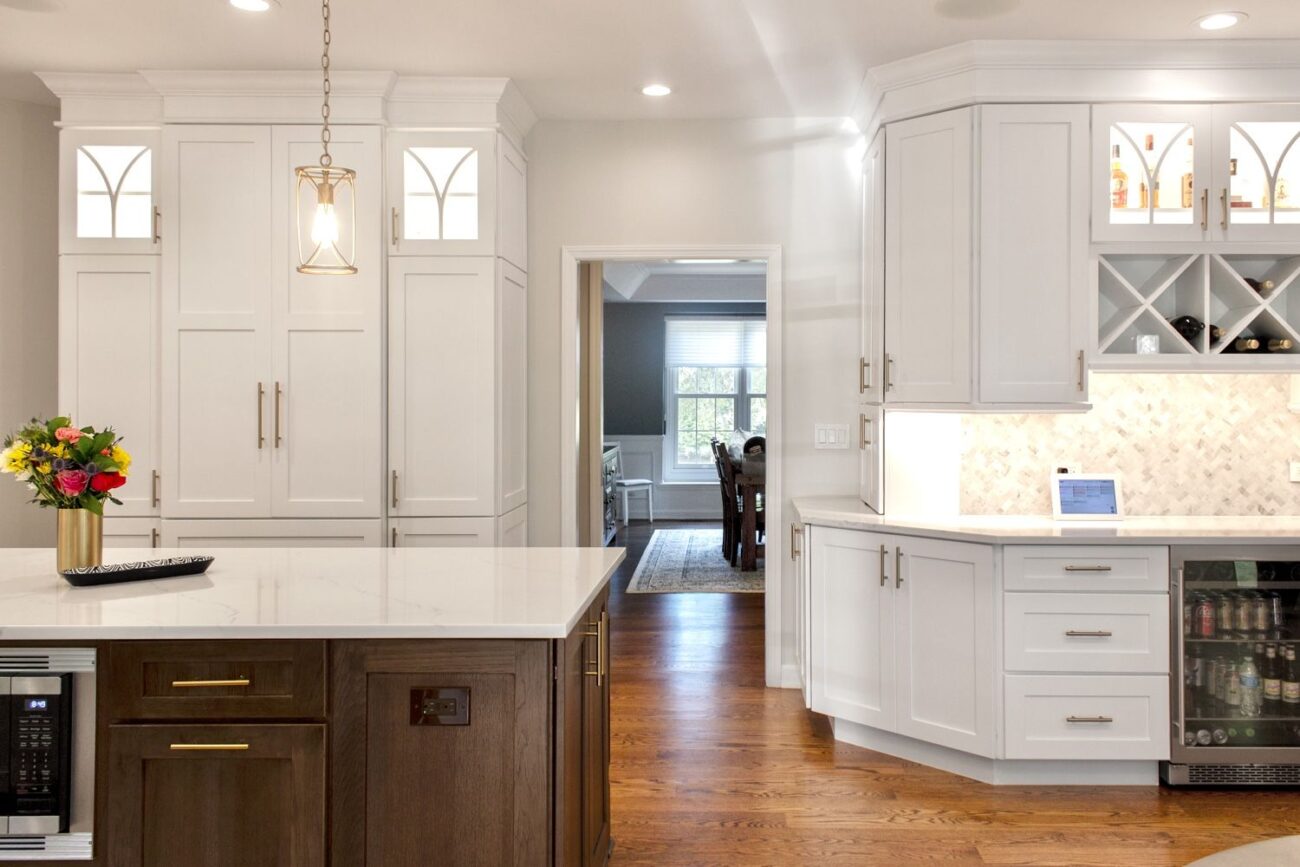
Understanding Cabinet Levels
One of the biggest cost drivers in any kitchen remodel is cabinetry. It’s often the largest single line item in your budget—and for good reason. Cabinets aren’t just storage; they set the tone for your kitchen’s look, feel, and functionality.
Whether you’re working with a modest budget or going all-in on your dream kitchen, it’s important to understand the three primary tiers of cabinetry we often use to help begin creating a project budget: base-level (sometimes referred to as entry level, or builder grade because they are often used in track homes by builders to minimize cost and show well), mid-level (usually a semi-custom line), and upper-level (enhanced semi-custom or near-custom). Knowing the differences can help you make informed decisions and avoid surprises as you plan your project.
Note: Some cabinets fall below this scale, known as “knock down” or RTA (ready-to-assemble) cabinetry. These are typically flat-packed, self-assembled units that are extremely budget-friendly. But, in our experience, they do not meet the durability or quality standards we aim to provide for our clients. This is why we do not include RTA cabinetry in our project estimates.
Likewise, there are fully custom cabinetry lines that fall above the semi-custom range, offering near-limitless design, finish, and construction options. These lines can be ideal for very high-end or specialized projects, but are outside the scope of what we typically price in our standard estimates. For the sake of clarity in our budgeting tools and estimate charts, we focus on base-level, mid-level, and upper-level semi-custom cabinetry.
Base-Level Cabinetry (Builder Grade):
Best for: Budget-conscious projects, rental properties, or short-term renovations
Price Range: $8,000–$15,000 (depending on kitchen size)
What to expect:
- Stock sizes typically without size modification options
- Less SKUs (options for cabinetry features / different pieces)
- Fewer customization options (limited colors, finishes, door styles)
- Typically made from MDF or 5/8” plywood
- Solid wood front frames, laminate interior
- Basic hardware and accessories (may not have soft-close doors, minimal interior features)
- Often assembled in bulk and mass-produced
Disclaimer: all images are owned and copyright by their respective owners and website (advancedesignstudio.com) and “https://madcitybasement.com/blog” is for news, information, product news and reviews.